
 The rough stone especially corundum from the mine or from around the world are brought to Thailand's factory to enhance quality, cut and polished followed by sorting by the expertise.
0 Comments
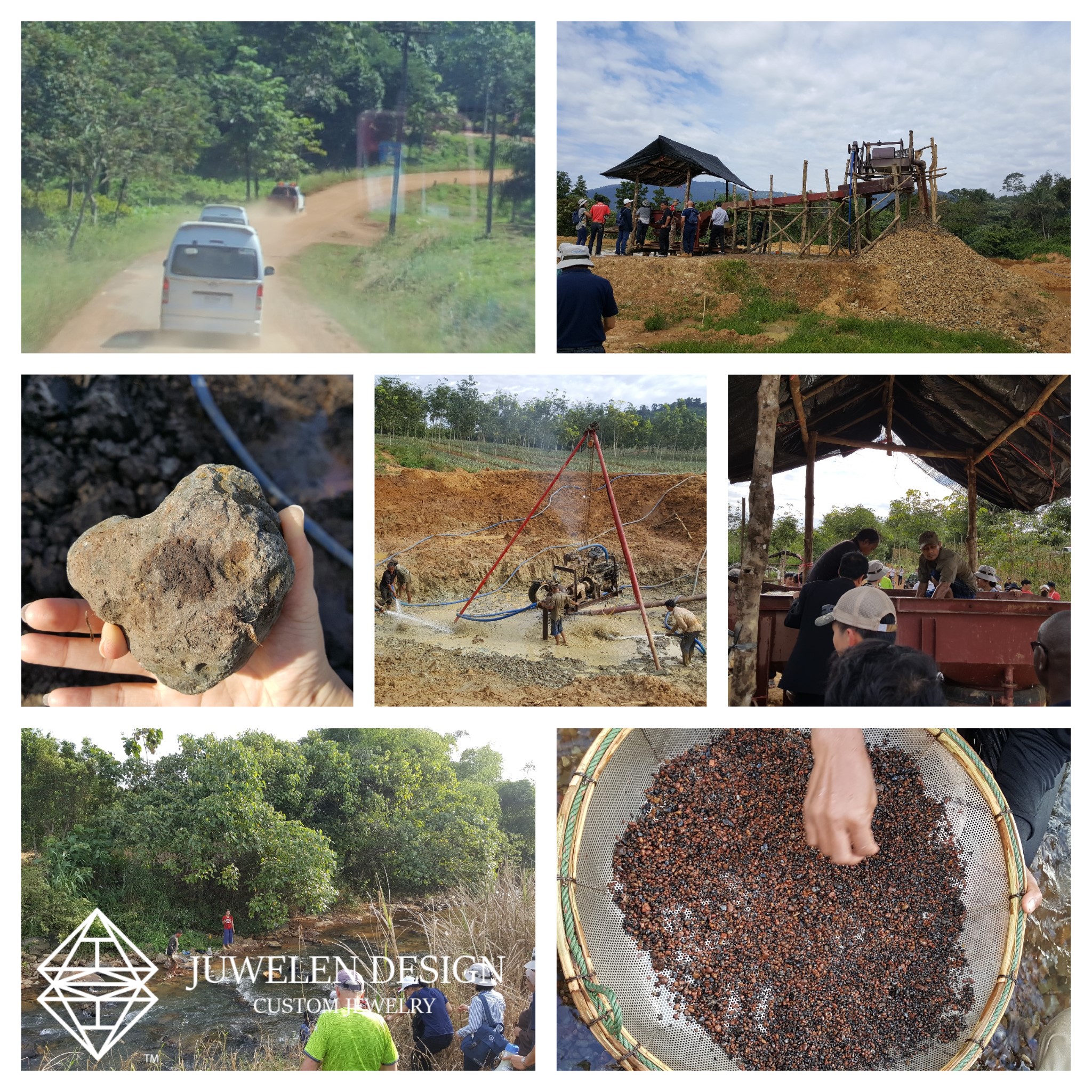 Trat is the home of renowned Siamese Ruby. Borai, Trat Province, near the Cambodian border, on the Eastern Seaboard of Thailand. It had been a land of plentiful gemstone resources, begun to do gems mining since 1973. Locals refer to rubies as "tabtim", which means "pomegranate", because the red gems closely resemble the bright red seed pods of pomegranate fruit. The ruby in Borai are in residual of basaltic or lateritic soils and alluvial gravels in the streams which developed in or near the basaltic terrains.
However, due to large number of gem miner is Borai, the local authorities has held concession for allocating the mining areas. The gems mining finally been greatly reduced since 1997. In 2014, the local people have started gem panning near the streams. Today, the area is heavily controlled where the roads at several border checkpoints-heavily guarded. Whilst there is less gem mining these days, Chanthaburi and Bangkok remain international trade centers for ruby. This began with governmental control of the Burmese ruby mines along with an ever-increasing global demand for red ruby, which caused Thailand to become an important source for the red jewel. Subsequently, when large-scale mining in Trat ceased, Thais developed ingenious methods for enhancing cut, color and clarity.  Citrine, comes from the Greek word meaning "citron", as many early Citrine found had a color similar to the citrus fruit of that name. Today, primarily the color can range from light yellow to bright or dark orange. Citrine is appropriately appointed the national birthstone of November. Citrine is well known for success and prosperity to the point that it is called the "Success Stone”. It is particularly used to promote success in business if used in the cash box of a shop, carried or worn, earning it another nickname, "Merchant's Stone".
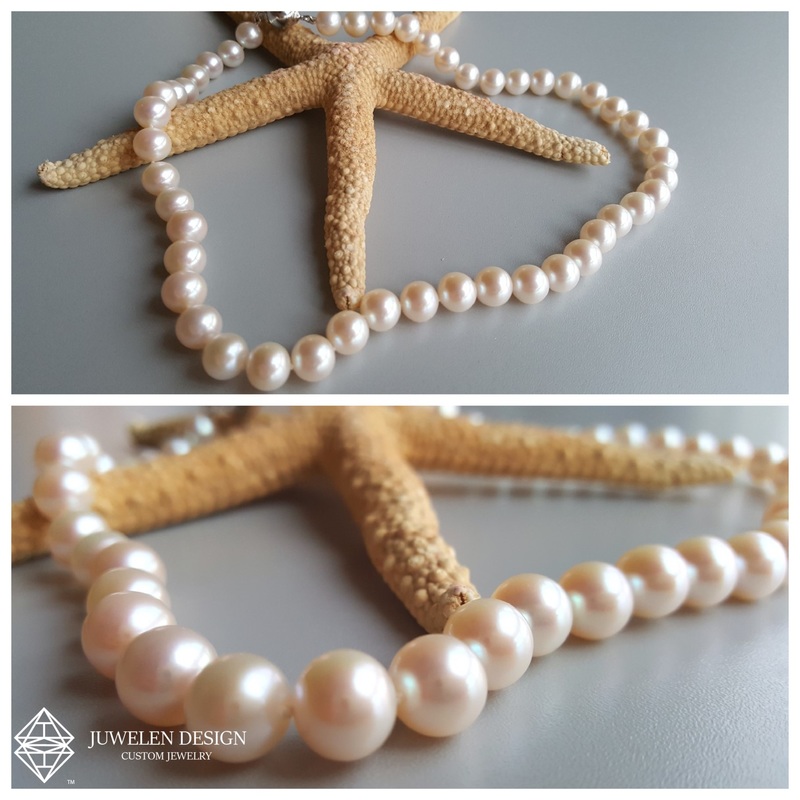 Fresh Water Pearl Necklace
Cultured freshwater pearls come from freshwater mussels called “Hyriopsis cumingii” or “Triangle mussel” and are primarily produced by China. It was named over a nineteenth-century British naturalist Hugh Cuming. It is cultivated from the lake, river and pond which away from the red-tide, storm and toxin. Cultured freshwater pearls come in various pastel shades of white, black, pink, peach, lavender, plum, purple, and tangerine, depending on the type of mussel. The typical size of freshwater pearls is 2mm - 16mm with 7mm - 8mm being the most common.  Repolishing enable you to restore back your sparkle into your jewelry and remove almost all your minor scratches. While replating gives it a bright white finish that shines beautifully.
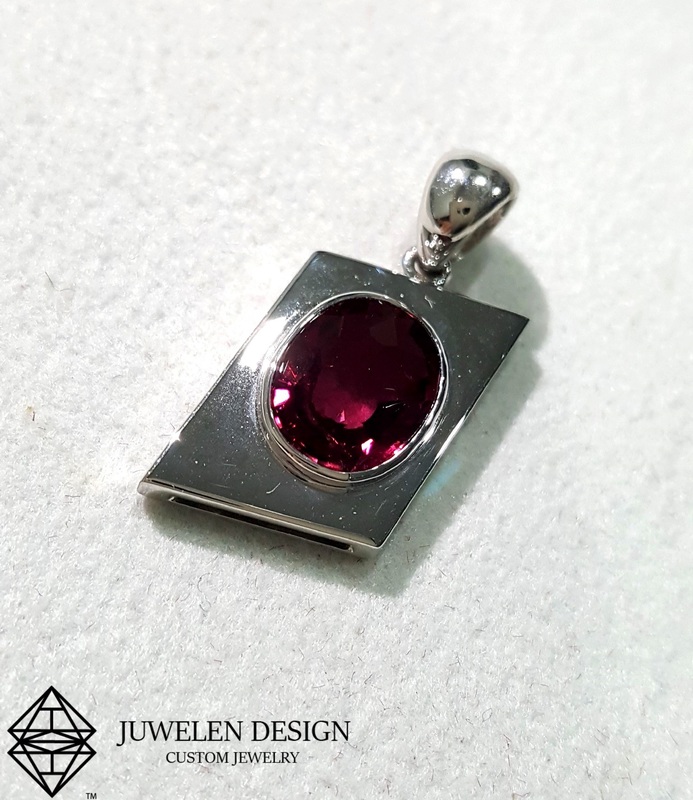 Tourmaline is the alternate birthstone for October, along with the opal. The stone was first discovered by Dutch traders off the West Coast of Italy in the late 1600's or early 1700's. The name tourmaline comes from the Sinhalese term “turmali,” which the name was given to all colored crystals on the island of Sri Lanka at that time. Tourmaline belongs to a complex family of aluminum borosilicates mixed with iron, magnesium, or other various metals that, depending on the proportions of its components, may form as red, pink, yellow, brown, black, green, blue or violet.
Pink tourmaline is also known as “rubellite,” which is the Latin word for red. Pink tourmaline is the rarest member of the tourmaline family. It is more rare than ruby in fact! The red color occurs because of impurities in the center of the stone. At one time in history, pink and red tourmaline were thought to be rubies. Pink tourmaline tends to be pinker in color than ruby.  White sapphire and diamond may seem identical. Both give off a bright white glow, and even come in similar forms. Still both types of materials exhibit many unique characteristics and benefits. These factors are color, light refraction, durability and price. White sapphire is genuine sapphire that is colorless and has the same hardness as sapphires in other colors. Diamonds refract larger amounts of light, and therefore shine brighter. White sapphires have good durability and come second only to diamonds when you compare hardness on the Moh's scale of hardness. Price of white sapphires which is much less as compared to diamonds.
 Brooches are perhaps the oldest type of jewelry. When man first took to wearing something more than a loin cloth, there emanated the necessity of holding the cloth together. The thorn or "spina" was probably the first of these pins, with pins of other material, like flint, found in the caves of the Paleolithic age. Pins of bronze were in common use during the bronze age.
 Spinel is thought extracted from either the Latin word, "spina", meaning thorn, due to its pointed crystal form, or the Greek word for "spark", due to its bright colour. Spinel occurs in as rose pink to rich red; lavender to deep violet; light to deep blue, orange, yellow, brown and black.
 Pyrope Garnet vs Rhodolite Garnet. The word Pyrope came from Greek meaning “fiery-eyed” where Garnet came from Latin meaning “dark-red”. It’s thought the word could have been extracted from the word “Pomegranate”. Rhodolite meaning “rose-colored” refers to its pinkish hue. It was started used by Egyptian and Roman back thousand years.
|
Author"Sharing is caring", by Ivy Teong, Chief Designer, Juwelen Design. She is also the author for juwelendesign.blogspot.my or ivyteong.blogspot.com 
Categories
All
|
Site powered by Weebly. Managed by Exabytes.my - Malaysia